
At first sight, the trees look trimmed. The symmetrically spaced branches are decorated with thistles that turned upward, as if each needle were greeting the sun in a morning yoga ritual. They were old trees, ones that told you that the ocean wasn’t too far away. The Norfolk Island pines are native to a small island in the South Pacific, but now embellish the coastlines of Portugal.
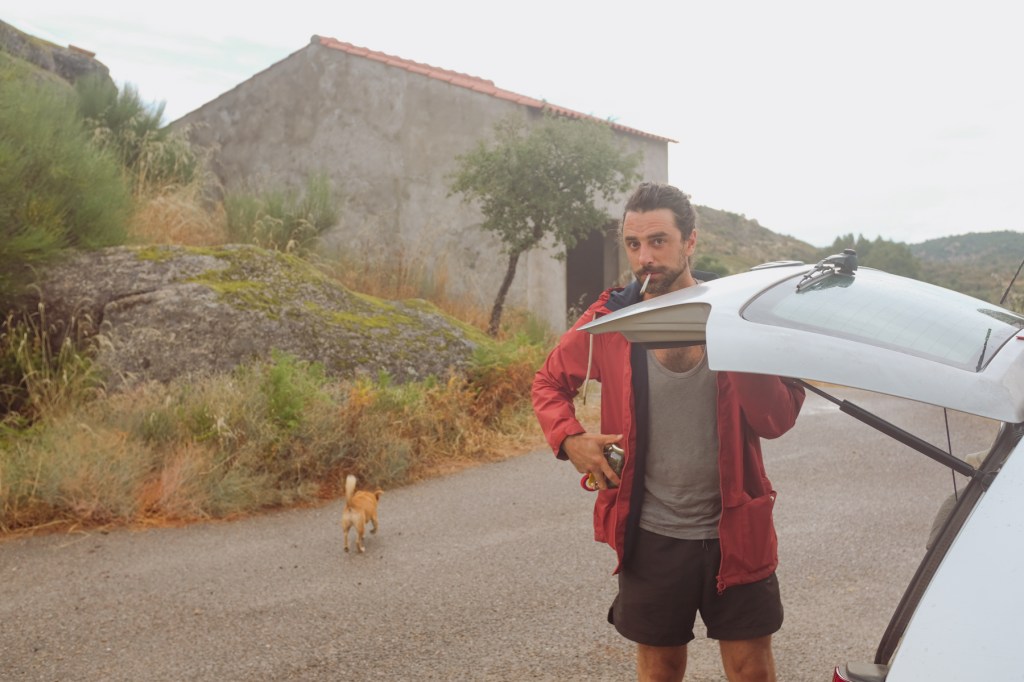
On my previous trips, I stuck close to them. But this year’s summer brought much rain. The streets of Lisbon were damp, and the air was slightly sooty with the Sahara sand, which, in increasing frequencies, now find their way up to Europe. There would be no beach days this time. On a drizzling summer morning, as a rooster roused the village-like neighborhood of Ajuda into motion, Bernardo picked me up in his jalopy and we set off for the Portuguese countryside in the Alentejo.
The Alto Alentejo
The area “beyond the Tagus River,” or além Tejo, is a wallflower. Away from the sea breezes, its upper inland reach, known as the Alto Alentejo, is a vast agricultural band of rolling hills and plains, painted gold and green by the sun-dried shrubs, olives, and oat grass that grow abundant. Once in a while, flecks of silver peek out from the land, like pieces of the marine that have stranded themselves far from shore. These are the young eucalyptus trees. They shoot up, tall and brazen like teenagers, and exist only in cliques. Each lanky body is splashed with so much menthol that their collective scent evokes a high school locker room, synthetically refreshing in the summer heat. The trees love to drink. Wherever there is an underground source, often in the intimate folds of the valley, they can be found congregating, imbibing, fecundating.
Where the lands have met laboring hands, they take on a bucolic and obedient appearance. The montados, as they’re called, are large swaths of pastureland sewn neatly with large oaks. These cultural landscapes are one of the calling cards of the Alentejo, a region known for its rurality and wistfulness, where time is tilled by humans but dictated by the grazing cattle.


Outside of Portalegre, the main city in the Alto Alentejo, cork trees line the roads like stitches on a cracked sole. You can always recognize a cork tree by its bark, or lack thereof. Many are stripped halfway down the trunk. It’s a lewd scene. Against the bare red cambium, each one is marked with a number indicating their next denuding. The trees are then left to their own for nine years, during which time they regrow their bark. Once they’re ready to be stripped again, they will have become unrecognizable, donning thick new coats and green sequins of lichen. Today, half of all cork used in the world can trace their origins to a tree in the Alentejo. For this reason, it is called Portugal’s “cork country.”
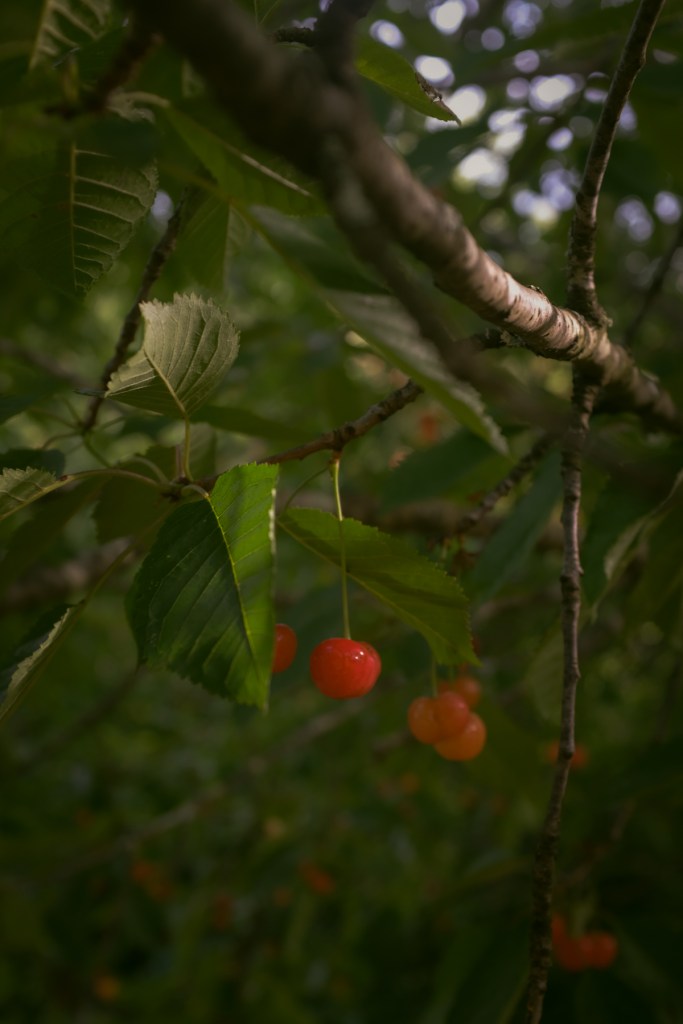
We rolled up the mountains of Serra de São Mamede, one of the few places in the Alentejo to sporadically see snowfall, before sliding down its shadows to the village of São Julião. Here, on Portugal’s easternmost frontier, were elderflowers, wild oregano, and Bernardo’s home in the countryside. As the day spilled into dusk, we stretched our legs of the three-hour drive with a stroll. Habibi, the cat, paced after us like a little cheetah while Bernardo demystified the biology, geology, and eco-politics of our home for the next few days. The thick, hairy fingers that greeted us and tickled our shoulders belonged to sweet chestnuts. The farmers planted them everywhere because they receive a subsidy for cultivating them. “But five years ago, it used to be cherries,” Bernardo explained. “When the government changed the incentive from cherries to chestnuts, all the cherry trees were torn out.” Or almost all. As we walked past an unattended parcel of land, he lifted a branch of emerald leaves, revealing a pair of the stone fruits, deliciously sweet for the picking.
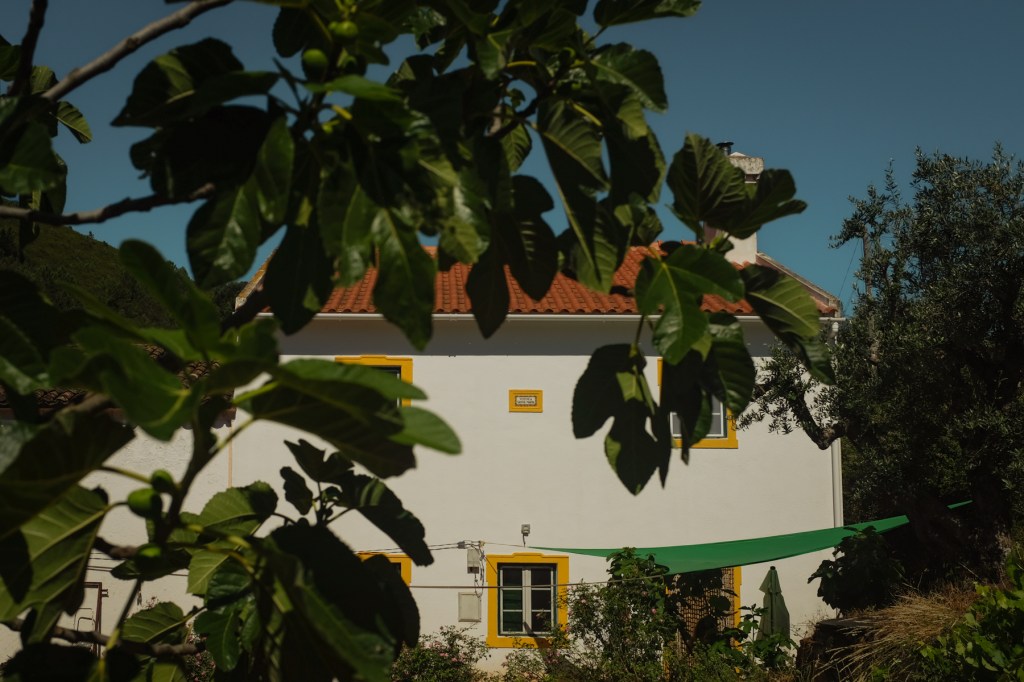
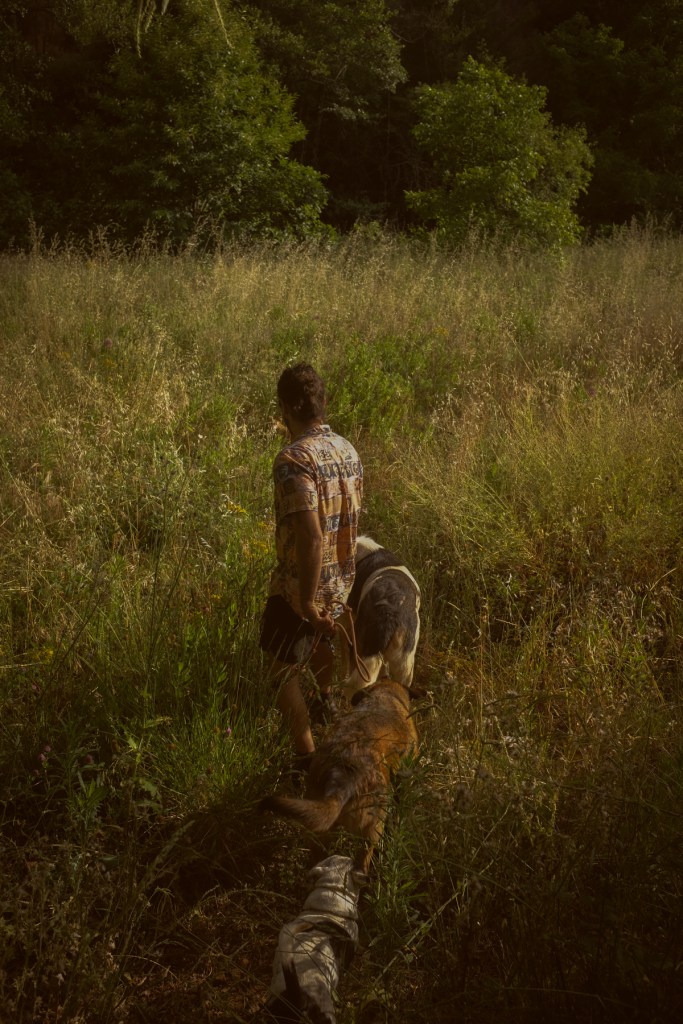
The evening aperitif started with homemade elderflower wine. Over a rustic dinner of leftover chicken and rice tossed with cabbage soup, we mulled over our individual escapes to the Alentejo. It was a cozy trio: Bernardo, a Cascaense yogi who traded the chic of the seaside for country comforts; Carolina, a modelesque soon-to-be grandmother who left her six kids at home in Setúbal to scour for a nest for the next chapter of her life; and me, lulled by the call of nature, calm, and a Cascaense.
We chewed the cud over the heaviness of the Portuguese people and the sentiment of saudade that they are famous for carrying. Under the dim kitchen light, a muted moroseness settled like dregs in our glasses of tinto. Behind each unspoken word was the echo of a thought from the past: a longing, a sorrow, or perhaps a regret. “We don’t like to let go of it, this melancholy,” says Carolina, ruminating over her words. “I don’t know why. We are not like the Spanish. The Spanish are joyful.” The Spanish are joyful, I concurred. Maybe it was the sea. The clement and exuberant Mediterranean has always been a sunny foil to a moody, sometimes foreboding, once untraversed Atlantic.

After coffee the next morning, Bernardo announced his plans to go to Spain for groceries. The land of joyful people was only a few kilometers away. Carolina and I went with. Crossing the border, the single-lane road we drove on suddenly doubled. With our backs to the Serra de São Mamede, the surrounding lands lost the little lushness they had and took on a preened appearance, sometimes senselessly so. “They plant so many oranges that you can’t eat,” griped the two Portuguese in unison about the ubiquitous Seville oranges, aesthetically pleasing yet useless in the kitchen.
At a freestanding white house in the sparsely populated Spanish Extremadura, we picked up wheels of queso fresco from a squat and amiable abuela. She spoke Portuguese with a melodious trill. Up until now, the continental Portuguese I had been hearing all sounded stoic. It was full of staccatos and swallowed vowels, as if its speakers were mimicking the choppy waves of an irate ocean. Even the name Portugal sounds angrily spat out. “Ptugal!” But the abuela sang as she spoke. Her voice was sugar. It didn’t matter if they adopted the language of their neighbors: the Spanish are joyful. It was beyond me to try to follow their conversation. Hard as I tried, I only recognized the occasional mention of “kesh freshk,” which was how the Portuguese pronounced queijo fresco—fresh cheese. The delicate curds, made from goat’s milk and light as a cloud, melted quickly on the tongue. It tasted like the one that Helena once brought home a few summers ago to her place in Barcelona. It is and will forever remain one of my favorite flavors of Iberia.
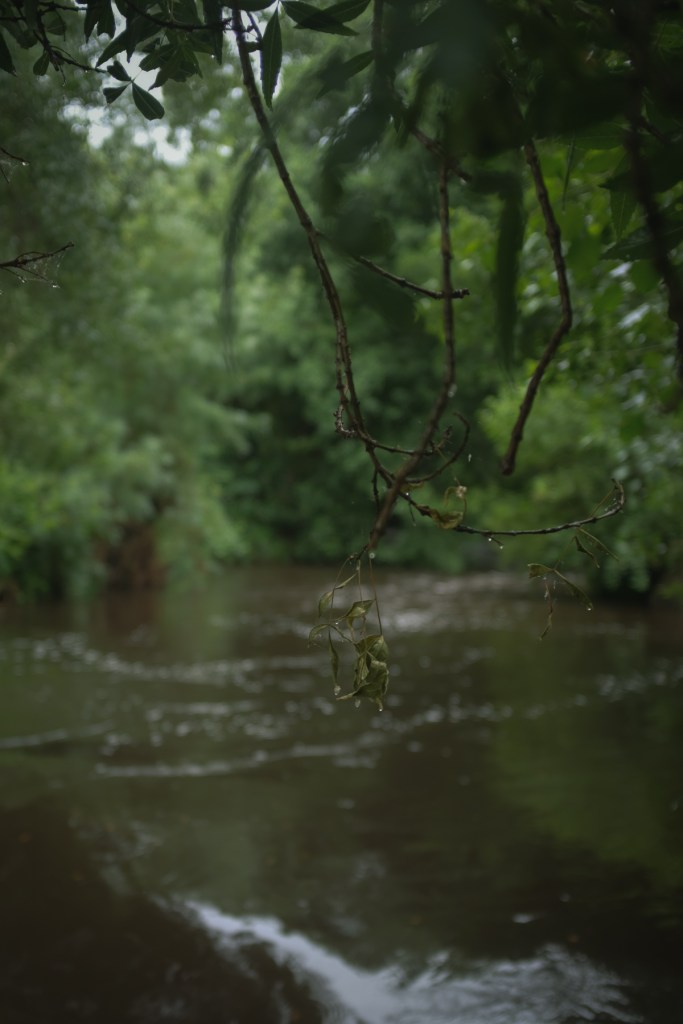


Before returning back to Portugal, we stopped at the natural pools of Codosera. By the riverbank of the Gévora (Xévora in Portuguese), this small oasis attracts bathers from both sides of the border. A duo of men, one blond and the other brown-haired, eyed us from a distance for some time. They eventually sauntered over, and upon realizing we were state-hoppers, gifted us with a thumb-sized portion of locally made hash. Was this how flirting was done in the hinterland? The water was chill, on the fringe of being outright cold. By the time we had dried off, the clouds from Lisbon had caught up to us.
I became well acquainted with the hammock in the yard over the next few days, surrendering myself to the sweet lack of anything to do apart from humming out a new song and the occasional video call to Québec. In the peak of the noon heat, when the villages of the Alentejo shuttered their doors and windows for sesta, I followed Bernardo through the high grass, thorny thickets, and stinging nettle down to the creek, where we peeled off our clothes and waded into the water. The sun was almost violent. Its beating rays left your skin full of tension, as if it were about to crack. The creek, with its tiny creatures dancing on the surface and silt that stirred and obscured your body as you treaded, felt like a soothing balsam. I napped for two hours on the futon back in the house.


I loved the mornings and how simple they were, the feeling of being content with nothing more than a cup of coffee and the sun. I loved all the silence and the space of the Alentejo to get lost in. One day, on the trail to the Cascata de Monte Sete, São Julião’s resident waterfall, I spotted the colony of griffon vultures that Bernardo had pointed out to us on our first evening here. One was in mid-flight. Outstretched, its sandy brown wings appeared as wide as a paraglider’s sail. Closer to the cascade, the scents of pine and eucalyptus lifted the sounds of birdsong into the air. There was no one else at the falls, and I didn’t expect there to be. The population in rural Portugal has been steadily declining for decades, especially in the Alentejo. Prior to the pandemic, São Julião had just constructed a school. But there were no longer enough children around for it to be put to use. Men like Bernardo, who injected youth into the aging community, were few and far in between.
I stayed at the Cascata until I felt cold, soaking in the solitude and letting the endless descent of the water dissipate the doubts, frustrations, and fear of missing out that I had brought with me from the city. It’s astonishing how quickly life’s problems can disappear with no one around. The addiction of the Alentejo was the serenity. We talked about it on the goodbye drive to Portalegre. “After a while, you get used to it,” says Bernardo, “and then people come in and will try fill your life with noise.” At a certain point, I became dubious as to whether I was a part of that noise. We said “Té já—See you later” without much fanfare, in typical dampened Portuguese fashion.


After a few days in the countryside, Portalegre, as quiet as it was on a weekday afternoon, felt like a proper city. There was a web of paved roads, an imposing church, a medieval castle, shopping markets, and cafés where one could pay and sit outside and chat. I took a cafezinho for eighty cents before starting toward the railway station outside of town. All along the way, the montados stayed by my side.
Upon leaving the Alentejo, I finally saw the Tejo from the train. There were places along its banks where I would have liked to loiter for a day or two, like on the untouched fluvial beaches that looked toward the crenellated towers of Almourol Castle.
Porto and the Douro River Valley
The two-and-a-half-hour journey from Portalegre to Porto passed through Entroncamento, a town that the Portuguese simply called “junction.” I let myself do what I did best on train rides—doze and daydream. I wrote Luís, a veterinarian from Porto whom I had met this April in Luxembourg. Eventually, I found myself no longer peering out at the Tagus, but the Douro. We had arrived in northern Portugal. I stepped out of the station at Porto Campanhã and checked into Residencial Veneza, a hoary lodging lovingly managed by an elderly couple. The room had a creaking colonial-style bed and classic mosaic tiles. Outside, it was just nearing the golden hour.
“What are your plans?” Luís asked before suggesting, “We can go for a francesinha if you would like.” Would I ever. The heavy meat sandwich ladled in beer-and-tomato sauce was invented in Porto, and I was eager to wrap my mouth around a local one. Over a cornucopia of eggs, cheese, veal rump, pork loins, fries, and a gravy boat of sauce, the conversation flowed out like drinks on tap. “This,” said Luís, putting a finger to his cylindrical glass of Super Bock, “is a fino. In Lisbon, they use the word imperial. But up here, it’s fino.” Fino—fine, just like the company sitting before me. Every time Luís talked about the north, his dark doe eyes became animated, lighting up with pride. I adored his attachment for his hometown, and perhaps envied it a little.

After dinner, we strolled through the old center. Luís sprained his feet a few weeks ago, and so we avoided the Ribeira—Porto’s picturesque riverside district at the bottom of the hill—and stuck to the Avenida dos Aliados, the town hall, and the areas around it. In Bolhão, we peeked into the Belle Epoque-era Café Majestic and city’s monumental market, reopened after more than four years of restoration. “They still sell the same products as before, and it’s newer and much cleaner now. But,” I sensed a whiff of saudade coming, “the traditional character is gone.” We continued walking, chattering about the escalating uniformity of cities nowadays, with a Starbucks or ALE-HOP blanketing every street corner.
By the garden of Cordoaria, Luís pointed out the campuses of his alma mater: the main edifice of the University of Porto, and the nearby institute of biomedical sciences. “In the past, only continental Portuguese professors taught here in the main building. The ones who came from Angola could only teach at the institute.” He was referring to the retornados, or returnees. Following the decolonization of Angola and Mozambique in 1975, more than half a million ethnic Portuguese left Africa for Portugal. Many, who had never set foot before in Europe, began new lives in the coastal cities of Lisbon, Setúbal, and Porto. I remembered Carolina mentioning her father, a general during the Colonial War. And Paulo, a Portuguese I met many years ago in Sitges who was born in Luanda, which I thought was exceptionally unique at the time. I asked Luís if he had any family who had lived in Africa. “Yes, both my parents, in Angola,” he revealed to my surprise. “But they were born in Porto. And before that, I had family in the Douro Valley. Close to Pinhão actually, where you’re going tomorrow.”

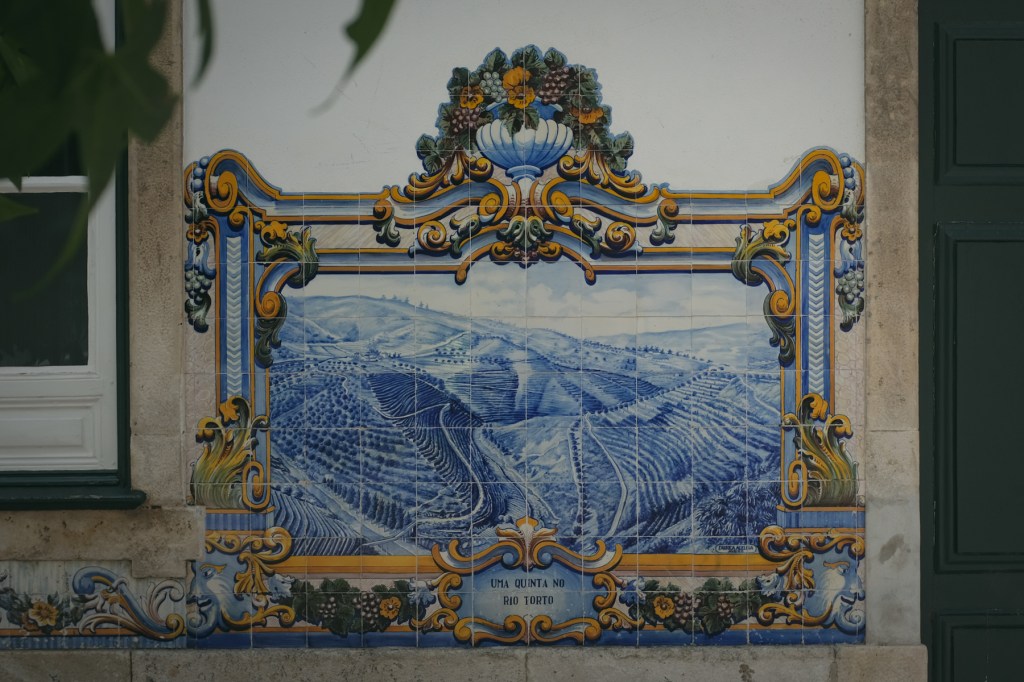

The train from Porto to Pinhão reminded me of the beauty of Ticino: the vine-laced hills and neatly combed paths of her freshly washed hair, and the clusters of melon-colored buildings of her freckles. In a disco-yellow carriage with billowing curtains, we wheeled between views of the snaking Douro River from above and from the side, which I preferred. I liked peering into the windows of the river cruises gliding by, and gazing up toward the quintas—country estates that resembled little castles, each one the centerpiece of its own tiny domain in the long and undulating land. There’s a glamorous, cinematic quality to it all. I think I could have easily ridden into the night.
With a little over a full day’s time, I didn’t plan to linger long at Hostel Douro Backpackers, but I found myself very much at home with Pedro, the well-traveled host with a wealth of knowledge of Pinhão, and Sara, his Swiss girlfriend. My sojourn in the Alentejo replenished me with peace and silence, but here in the north, the dam broke: I could not stop prattling. In between anecdotes of Switzerland and beyond, Pedro and Sara shared their tips for things to do, see, and taste. There were the viewpoints of Casal de Loivos and São Cristóvão, a hidden river pool, and local specialties such as drunken cake and port tonic—made with the region’s famous fortified wine named after Porto. I dove into the valley and its veins, its ancient vineyards, and tipples of reds, whites, and rosés. It didn’t matter when the raindrops eventually found their way up north too. I was already submerged in sublimity, in the most beautiful corner of continental Portugal.


 Gregory Gioro